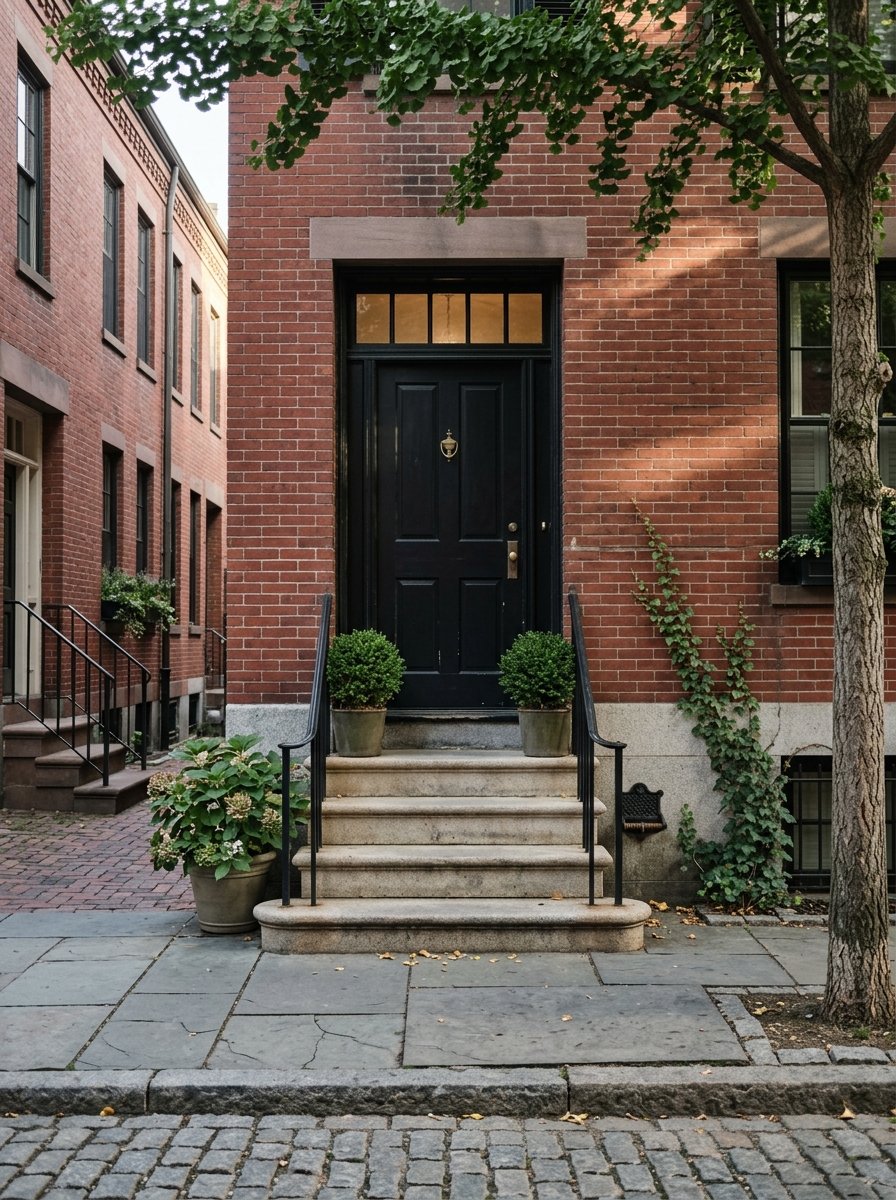
West Village Pied-à-Terre Hideaways to Know
If you want a Manhattan home that feels tucked away without feeling cut off, the West Village stands apart. Its appeal is not just charm. It is the rare mix of preserved streets, lower-scale buildings, and hidden passages that can make city living feel unexpectedly private. If you are looking for a pied-à-terre or a lock-and-leave home with a softer, more residential rhythm, this is where the neighborhood starts to make sense. Let’s dive in.
The West Village’s hideaway character comes largely from preservation and scale. The Greenwich Village Historic District was designated in 1969 and remains New York City’s largest historic district, with later designations expanding or enhancing protections. That matters because historic district rules help preserve the area’s distinct sense of place and regulate exterior changes.
In practical terms, that protection helps explain why so many blocks still feel intimate. You see a neighborhood shaped by row houses, smaller apartment buildings, and streets that resist the more uniform feel of newer high-rise districts. For buyers who value atmosphere and continuity, that physical setting is part of the appeal.
Some parts of the West Village feel especially tucked away. These are the places that often leave the strongest impression on buyers who want discretion, quiet, and a more residential experience.
Patchin Place and Milligan Place are among the clearest examples of enclosed Village living. Both sit within the block bounded by Sixth Avenue, Greenwich Avenue, Tenth Street, and Eleventh Street, and both began as modest mid-19th-century workmen’s cottages.
What makes them memorable is their enclosed, inward feel. Even in a neighborhood known for character, these small passages read as more private than the surrounding streets. They show how the West Village can feel sheltered while still sitting inside central Manhattan.
Grove Court offers a different version of seclusion. It sits back from Grove Street behind an iron gate and passageway, with six connected rear-lot houses that took on their present form in the early 20th century.
That set-back arrangement creates a sense of remove from the street. For many buyers, this is the essence of a pied-à-terre hideaway. You are still in the city, but the approach home feels more discreet and self-contained.
MacDougal-Sullivan Gardens is inward-facing in a way that feels especially rare in Manhattan. It consists of two rows of houses facing MacDougal and Sullivan Streets while sharing a common garden.
This kind of layout changes how a block feels. Instead of every home turning outward to the street, the shared interior garden creates a softer and more sheltered residential pattern. It is another example of how the Village’s built form supports privacy without isolation.
Nearby Washington Mews is outside the West Village proper, but it helps explain the broader Village idea of tucked-away residential living. It is identified as a private street, and its 1917 remodeling turned earlier row houses and stables into a residential complex with artists’ studios.
Why does that matter here? Because it offers a useful reference point for buyers drawn to mews-style settings, gated approaches, and lower-key residential pockets. The West Village has its own version of that feeling, especially on shorter passages and inward-facing blocks.
The West Village is more varied than the simple brownstone image suggests. NYC Planning describes a mix that includes converted loft buildings, 19th-century row houses, the West Village Houses, and some newer taller buildings.
Even with that variety, the overall scale stays relatively low-rise to mid-rise. Along Washington Street, Perry Street, and West 11th Street, the neighborhood is largely made up of two- to six-story residential buildings, often with local ground-floor retail such as shops and galleries. Lower-scale clusters also remain along Christopher, Weehawken, and Charles Lane.
That matters if you are comparing neighborhoods for a pied-à-terre purchase. The West Village often offers a domestic scale that feels very different from Midtown-style tower inventory. If you want a home that feels easier to arrive at, leave, and return to without stepping into a high-rise environment, that difference can be meaningful.
For many buyers, a pied-à-terre is about more than square footage or finish level. It is about how a home fits into your life. The West Village’s mix of walk-up buildings, row houses, converted lofts, and courtyard-style enclaves can support that lifestyle in a way that feels low-key and grounded.
This does not mean every property will feel hidden. It means the neighborhood has an architectural pattern that makes that feeling more possible here than in many other parts of Manhattan. If your goal is a residence that feels personal, discreet, and easy to lock and leave, the West Village deserves a close look.
It is important to understand what kind of quiet the West Village offers. This is not an isolated neighborhood. The 6th Precinct serves Greenwich Village and the West Village, and the area includes well-known destinations like Christopher Street and Washington Square Park.
That means activity is part of the setting. The West Village is best understood as selectively quiet rather than silent. The strongest hideaway feeling tends to come from blocks that sit just off the main pedestrian routes, not from the neighborhood as a whole.
For many buyers, that is exactly the point. You can have a more private residential feel while staying close to restaurants, local retail, and everyday city energy. The balance is subtle, but it is one of the neighborhood’s defining strengths.
The west side of the neighborhood benefits from proximity to Hudson River Park. Its first phase opened between West Charles Street and West 11th Street, bringing green lawns, trees, seating, and passive recreation close to nearby residential blocks.
That access matters for day-to-day living. A neighborhood can feel more livable when open space sits within easy reach, especially if you are using the home as a part-time residence or city base. The park adds breathing room without changing the neighborhood’s urban character.
There are also practical realities to keep in mind. NYC DOT has described the West 4th/Christopher/Grove intersection as complex and difficult to cross. In a neighborhood known for winding streets and irregular layouts, convenience can depend block by block.
If you are specifically seeking a West Village hideaway, it helps to focus on setting as much as the apartment itself. The most appealing options often combine a smaller-scale building with a location just off the busiest corridors.
A few features to prioritize include:
This kind of search benefits from local block-by-block judgment. In the West Village, two homes that are only a short distance apart can offer very different arrival experiences.
The West Village rewards nuance. On paper, many properties may seem similar. In person, the differences between a lively corner, a sheltered lane, a set-back entrance, or a quiet block can be significant.
For buyers considering a pied-à-terre, that is where tailored guidance matters most. You are not only choosing a home. You are choosing the feeling of the approach, the rhythm of the block, and the degree of privacy that fits your lifestyle.
If you are weighing the West Village against other Manhattan options, a focused search can help you identify where the true hideaway opportunities still exist. To schedule a confidential consultation, connect with Marina Bernshtein.
Marina developed the tenacity to face challenges and adversity in fast-paced environments early on and has continued to excel. Marina is happiest when she finds the perfect home for her buyers or renters and achieves the optimal value for her sellers. Contact her today!