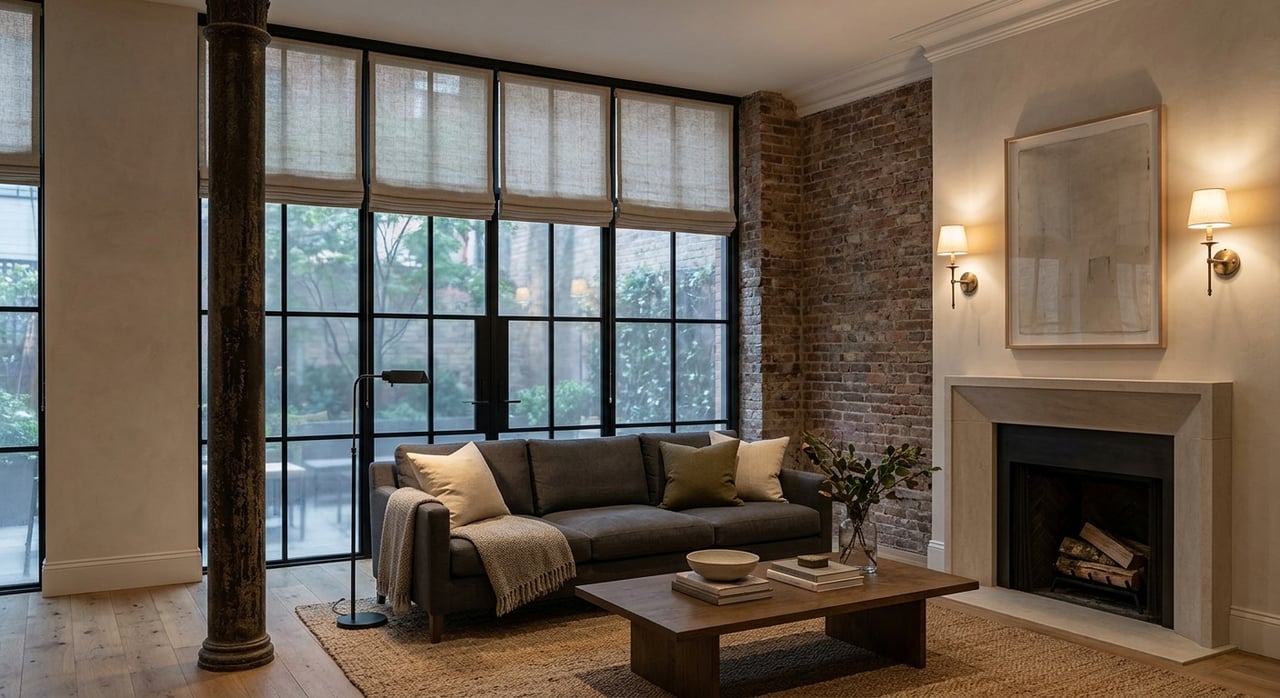
FiDi vs Tribeca Condos: Choosing Your Downtown Base
If you want a downtown condo but feel split between FiDi and Tribeca, you are not choosing between good and bad. You are choosing between two very different versions of Lower Manhattan living. For many buyers, the real question is how much you want to pay for space, architectural character, and limited supply versus a lower entry point and amenity-driven convenience. Let’s dive in.
FiDi and Tribeca both sit within Community Board 1 and NYC DOE District 2. In practical terms, that means you are staying within the same broader downtown framework for civic services and public school district geography.
That shared setting matters because it shifts the comparison. Instead of asking whether one neighborhood is “better” in a broad sense, it makes more sense to focus on building type, daily rhythm, interior scale, and pricing.
Lower Manhattan also looks different today than it did years ago. According to the Downtown Alliance, the residential population exceeded 70,000 in 2025, office leasing had its strongest year since 2019, and tourist visits reached 9.3 million in 2024. That helps explain why both FiDi and Tribeca feel more active and established as residential neighborhoods than older assumptions might suggest.
FiDi often appeals to buyers who want a true downtown base with strong transit access and a more approachable luxury condo price point. It is defined by a mix of office-to-residential conversions and newer towers, many of which offer the kind of full-service setup buyers expect from modern condo living.
Much of Lower Manhattan’s office real estate was converted in the 1990s and early 2000s. That legacy still shapes FiDi today. You will often find layouts and buildings that prioritize amenities, service, and convenience, along with rooftop spaces and other features that support a building-centered lifestyle.
There is also a distinct daily rhythm here. FiDi tends to feel busier during the workday, with office workers and visitors adding energy to the streets. After business hours, the neighborhood becomes noticeably calmer, with nightlife concentrated in a smaller number of areas such as Stone Street.
For some buyers, that pattern is a plus. If you want to be in the middle of downtown with excellent connectivity and a cleaner entry price, FiDi can make a strong case.
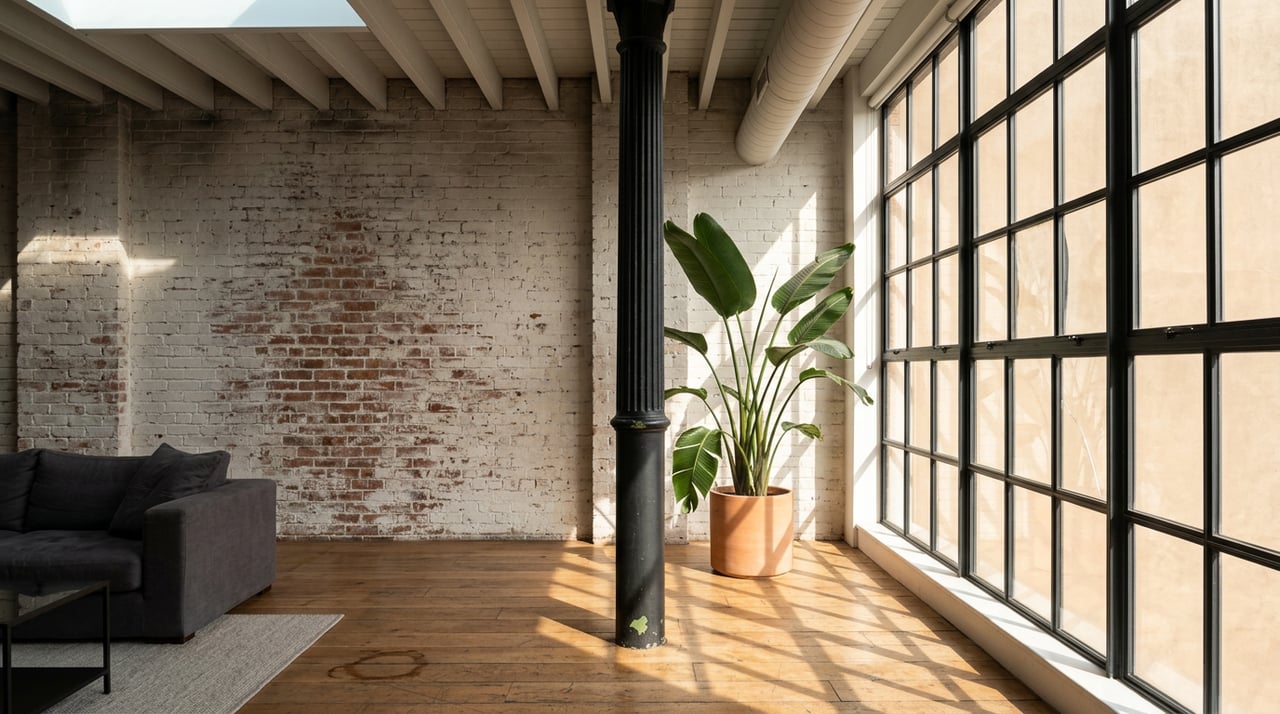
Tribeca offers a different kind of luxury. Its condo inventory leans toward cast-iron lofts, converted industrial buildings, boutique pre-war conversions, and a smaller group of design-forward newer developments.
This built environment is a major part of the appeal. Tribeca’s housing stock tends to feel more architectural and more individual, especially when compared with the more conversion-heavy and tower-oriented profile you often see in FiDi.
Scarcity also plays a major role. Tribeca has four historic districts, and much of the neighborhood is landmarked, which limits the amount of readily available development land. That tighter supply supports its long-term premium and helps explain why buyers often compete for a narrower set of comparable homes.
Size is another important distinction. PropertyShark found that Tribeca had a 1,860-square-foot median condo size in 2023, one of the largest condo medians in New York City. If your priorities include generous proportions, loft-style volume, or homes that feel harder to replicate elsewhere, Tribeca stands apart.
The clearest difference between FiDi and Tribeca is price. Recent market snapshots show FiDi with a $1.2 million median sale price and $1,164 per square foot in March 2026. Tribeca, by contrast, posted a $3.4 million median sale price and $1,786 per square foot in April 2026.
Condo-specific figures tell a similar story. FiDi’s median condo price was $1.3 million in March 2026, while Tribeca’s was $3.4 million in April 2026. In other words, this is not a minor pricing spread. It is a meaningful repositioning of your budget.
That premium is not only about prestige. It reflects product mix. FiDi’s lower base price lines up with conversion-heavy inventory and amenity-rich buildings, while Tribeca’s pricing reflects larger homes, architectural character, landmark constraints, and tighter supply.
If you are evaluating these neighborhoods strategically, the tradeoff is fairly direct. FiDi generally buys you a lower point of entry into downtown condo ownership. Tribeca usually asks you to pay more for size, scarcity, and a different residential experience.
One of the most practical differences between these neighborhoods is how inventory feels when you start your search. In FiDi, the market often presents more of a building-led conversation. You may compare service levels, amenity packages, views, and tower or conversion style.
In Tribeca, the search can feel more property-specific. Individual homes often vary more in layout, scale, ceiling height, architectural details, and provenance. That can make the right apartment especially compelling, but it can also make side-by-side comparisons less straightforward.
This matters if you are trying to move efficiently. Buyers who value a streamlined search process often appreciate FiDi’s more standardized luxury product. Buyers who are willing to wait for a distinct home with more character may find Tribeca worth the patience and the premium.
Transit is a strength in both neighborhoods, but the emphasis is slightly different. FiDi is anchored by the Fulton Street Transit Hub, which connects 10 major subway lines and PATH, making it one of the most connected points in Lower Manhattan.
Tribeca also offers strong access, including the 1, 2, A, C, and E trains, with additional lines several blocks east and PATH nearby. For many buyers, both neighborhoods support easy movement across Manhattan and beyond.
The difference is less about whether transit is good and more about how central you want that transit node to feel in your daily routine. If immediate, high-volume connectivity is part of your priority list, FiDi has an edge in concentration.
For buyers thinking long term, it is useful to know that both neighborhoods share the same DOE district context. Official nearby options in District 2 include P.S. 234 Independence School on Greenwich Street, Lower Manhattan Community Middle School at 26 Broadway, Millennium High School at 75 Broad Street, and District 2 pre-K centers at 10 Reade Street and 52 Chambers Street.
That shared framework is important because school access is often discussed as though it belongs more to one neighborhood than the other. Based on the district and nearby options, it is more accurate to view this as a downtown asset that serves both FiDi and Tribeca.
Where the neighborhoods differ more clearly is overall feel. FiDi has the sharper weekday pulse, then tends to quiet down after work. Tribeca is known for quieter cobblestone streets, restaurants, boutiques, and a steadier residential energy throughout the week.
FiDi can be the better fit if you want:
For many luxury buyers, FiDi works well as an efficient Manhattan foothold. It offers access, service, and price positioning that can be harder to find in more supply-constrained neighborhoods.
Tribeca may suit you better if you want:
Tribeca’s appeal is often strongest for buyers who care deeply about product quality and uniqueness. If the apartment itself is the priority, and you want something that feels materially different from a more conventional condo tower, Tribeca often rises to the top.
If you are torn between the two, focus on the part of the tradeoff that matters most to you. FiDi is the value-and-convenience anchor. Tribeca is the scarcity-and-lifestyle counterpoint.
That means your decision may come down to one question: are you more focused on lowering your entry point while keeping strong service and connectivity, or are you willing to pay significantly more for scale, character, and tighter supply?
Neither answer is inherently right. The right choice is the one that matches how you plan to live, how long you expect to hold, and what kind of condo experience you want your downtown base to deliver.
For buyers weighing nuanced tradeoffs in Manhattan’s luxury market, clear strategy matters as much as access. If you are considering FiDi, Tribeca, or another downtown option, Marina Bernshtein offers discreet, informed guidance tailored to your priorities.

Marina developed the tenacity to face challenges and adversity in fast-paced environments early on and has continued to excel. Marina is happiest when she finds the perfect home for her buyers or renters and achieves the optimal value for her sellers. Contact her today!