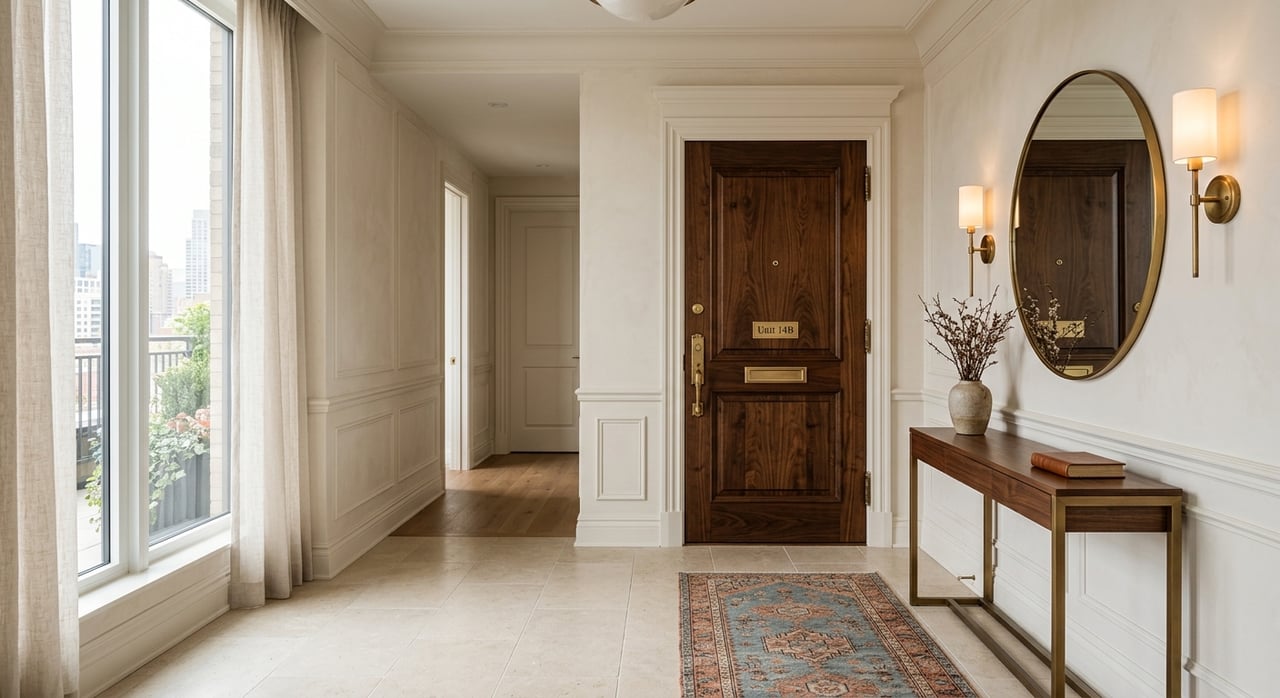
How to Sell a Midtown Luxury Condo Discreetly
If privacy is one of your top priorities, selling a Midtown luxury condo can feel like a balancing act. You want to protect your personal information, limit unnecessary exposure, and still attract the right buyer at the right price. The good news is that discretion is possible when the process is planned carefully, and this guide will show you how to think about private marketing, pricing, timing, and what still becomes public in New York City. Let’s dive in.
Midtown attracts a wide range of luxury buyers, from executives and investors to international purchasers seeking a Manhattan foothold. If you own a high-floor condo, a branded residence, or a home in a trophy tower, you may not want your sale broadly advertised from day one.
In many cases, privacy is about more than personal preference. You may be managing a trust or LLC sale, coordinating with multiple stakeholders, or simply trying to avoid unnecessary attention while still preserving leverage in a competitive market.
While Midtown-specific public reporting is limited, Manhattan luxury data offers a useful backdrop for sellers in the area. Corcoran’s first-quarter 2026 reporting showed 2,757 closings across Manhattan, up 1% year over year, with $6.2 billion in sales volume, up 4%.
The same report noted that days on market fell 9% to 110 days, while active inventory dipped 2%. Corcoran’s May 2026 update also showed Manhattan contracts up 12% year over year, active listings down 6%, and Midtown among the submarkets showing nearly 40% annual growth.
At the top of the market, demand has remained meaningful even as supply has tightened. Corcoran reported that the $5 million and above segment stayed above its historical May average, even with inventory at a 12-year May low.
That matters if you are considering a private sale. A selective market can support a discreet strategy, but buyers still expect pricing discipline and polished presentation.
When you limit exposure, your asking price carries even more weight. Without the full reach of a public launch, you have fewer opportunities to correct a pricing misstep before the listing starts to feel stale.
Douglas Elliman’s fourth-quarter 2025 Manhattan data placed the luxury entry point at $4.2 million and the median luxury sale price at $6.038 million. Luxury listing inventory was down 15.2% to 1,090, with 6.5 months of supply.
Those figures help frame the market, but they should not be used as a shortcut for pricing your condo. In Midtown, the most useful comps are usually the closest matches by tower, floor, line, view, layout, and finish level.
Corcoran’s 2026 data also suggests buyers are responding to realistic pricing and move-in-ready condition. In May 2026, condos averaged 4.1% below last asking price, while the overall Manhattan market averaged a 2.3% discount off last ask.
For you, that means a discreet listing usually performs best when it enters the market with a credible, well-supported price. A hopeful number may protect ego in the short term, but it can weaken momentum if the right buyers pass early.
A private sale does not mean an unstructured sale. In practice, discretion usually works best when it follows a defined plan with clear rules around who sees the property, what materials are shared, and when the strategy is reassessed.
Current MLS policy allows two privacy-oriented paths. One is an office exclusive, which is filed with the MLS but not disseminated to other participants or publicly marketed. The other is a delayed marketing exempt listing, which can pause public IDX and syndication for a period allowed by the local MLS.
In both cases, seller consent and disclosure are required. That makes a discreet launch more deliberate than a standard public listing.
For a Midtown luxury condo, a staged launch can offer a practical middle ground. This may begin with a short private preview to a small circle of qualified brokers, followed by tightly controlled marketing materials and buyer vetting before address disclosure.
This approach is not a legal requirement. It is simply a sensible way to align privacy goals with the realities of Manhattan’s high-end market.
A structured private window can help you test pricing, gauge buyer response, and decide whether staying private still serves your goals. It can also reduce unnecessary traffic through the home and keep the process more orderly.
Discretion has benefits, but it also has a cost. The biggest one is reduced price discovery.
Zillow’s analysis of 2023 and 2024 sales found that homes sold off the MLS typically sold for $4,975 less than comparable homes listed on the MLS, or about 1.5% less nationally. That study excluded sales above $10 million and new construction, so it is only directionally useful for Midtown trophy condos.
Even so, the broader point is worth considering. When fewer buyers know a property is available, competition may be lower, and lower competition can affect price.
That does not mean private marketing is the wrong choice. It means you should enter the process with a clear understanding of the trade-off between confidentiality and exposure.
One of the smartest ways to protect both privacy and pricing is to define the private window in advance. Rather than letting a discreet listing drift, establish a review point early in the process.
For example, you may decide to assess activity after a short preview period based on broker feedback, number of qualified inquiries, and the quality of buyer engagement. If the response is limited, you can reevaluate pricing, materials, or whether a broader public launch makes more sense.
In the current Manhattan market, where inventory remains constrained but buyers are selective, this disciplined approach often works better than open-ended private marketing. It keeps your strategy active instead of passive.
This is where expectations matter. You can manage privacy during the marketing phase, but you cannot make a New York City condo sale fully invisible.
Under New York’s Property Condition Disclosure Act, condominium units and cooperative apartments are excluded from the mandatory disclosure statement required for one- to four-family homes. That means condo sellers generally face fewer up-front disclosure steps than house sellers in New York.
However, the closing itself still creates a public record. In Manhattan, property records are public through ACRIS, and the City Register maintains records going back to 1966.
If your goal is full anonymity, it is important to know that marketing privacy and public-record privacy are not the same thing. You can limit public promotion, but the deed and related transfer records still become part of the official record.
A discreet sales strategy should also account for the closing trail. New York City requires the Real Property Transfer Tax packet to be created online in ACRIS, and the RPTT return and tax payment are due within 30 days after the transfer, even if no tax is owed.
For individual condominium-unit transfers, the city transfer tax is 1% up to $500,000 and 1.425% above that. New York State also imposes additional transfer taxes, and a mansion tax applies to qualifying residences.
These filing requirements are one more reason to think of discretion as a marketing strategy, not a way to erase the paper trail. A well-advised seller plans for both realities from the outset.
A successful private listing usually depends on preparation more than publicity. Before launch, it helps to align on the basics so every step feels intentional.
Consider focusing on these areas:
When these details are handled upfront, a discreet sale is more likely to feel calm, controlled, and credible to buyers.
There is no single formula for selling a Midtown luxury condo with discretion. The right plan depends on your privacy concerns, your price goals, the property itself, and how much exposure you are willing to trade for control.
For some sellers, a brief private launch is the ideal first move. For others, broad exposure may ultimately produce stronger price discovery. The key is to make that decision deliberately, with current market context and a clear structure behind it.
If you are weighing a discreet sale in Midtown, careful positioning can make all the difference. For a confidential conversation about pricing, strategy, and how to protect your privacy while pursuing a strong outcome, connect with Marina Bernshtein.




Marina developed the tenacity to face challenges and adversity in fast-paced environments early on and has continued to excel. Marina is happiest when she finds the perfect home for her buyers or renters and achieves the optimal value for her sellers. Contact her today!