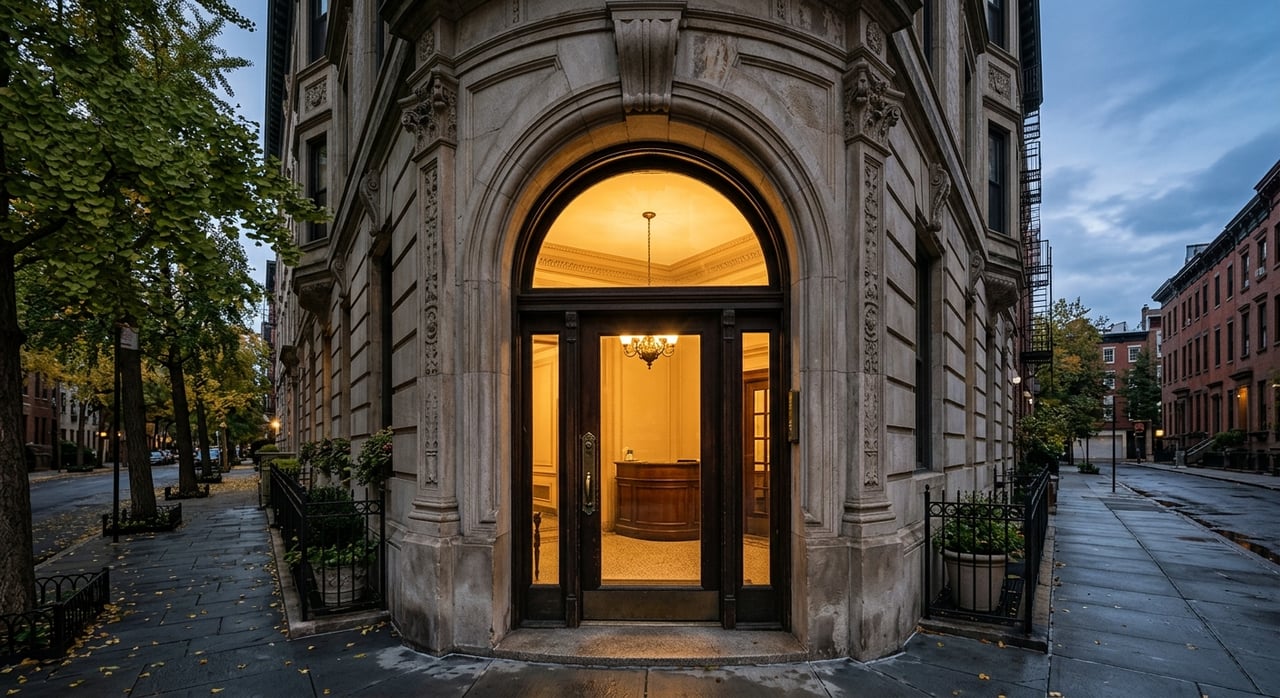
Explore Lincoln Center Upper West Side Living
What if your neighborhood calendar included opera, jazz, dance, film, and a walk through the park, all within a few blocks of home? Living near Lincoln Center appeals to many Manhattan buyers because it offers more than a famous address. It gives you a daily rhythm shaped by culture, convenience, green space, and a wide range of residential options. If you are considering the Upper West Side, this guide will help you understand what life near Lincoln Center can actually look like. Let’s dive in.
Lincoln Center is located in Lincoln Square on the Upper West Side, spanning West 62nd to 65th Streets between Columbus and Amsterdam Avenues. The campus is home to 11 resident arts organizations, with year-round programming across music, theater, dance, film, and opera. Many events are also free or Choose-What-You-Pay, which makes the area feel active beyond major performance nights.
That everyday energy is a big part of the appeal. This is not just a place you visit for a special occasion a few times a year. For many residents, Lincoln Center becomes part of the week itself, whether that means a planned evening out or a spontaneous stop after work.
The David Rubenstein Atrium helps anchor that routine. It is open daily to the public and hosts weekly programming that includes concerts, family events, dance parties, talks, and art installations. As of June 2026, its calendar includes multiple jazz, folk, cabaret, and family-oriented events across the month.
That matters if you value access without needing a full production schedule every time you go out. You can enjoy the arts in a way that feels flexible and local. In this part of the Upper West Side, culture is woven into everyday life rather than reserved for formal evenings only.
Food is part of the neighborhood rhythm around Lincoln Center. The campus itself offers dining and grab-and-go options, and the Atrium includes The Independent Café, which serves breakfast, lunch, snacks, coffee, wine, and dessert. It also stays open during Atrium performances, which supports a very natural pre-show or post-show routine.
Beyond the campus, Lincoln Square has a well-established dining identity. The Lincoln Square BID describes the district as a dining-and-culture hub and publishes its own local dining guide. That combination helps explain why the area works well for both quick weekday stops and longer evenings out.
One of the clearest examples is Café Fiorello. The Lincoln Square BID specifically notes it as a good choice for pre-theater dining, as well as for post-theater dinner, cocktails, dessert, or a lighter bite. That description captures the local pace well.
When you live nearby, a night out does not have to feel complicated. You can meet friends for an early dinner, catch a performance, and still have options after the curtain comes down. Or you can keep it simple with coffee and a walk through the neighborhood.
The TKTS Discount Booth at the Atrium adds another layer of flexibility. Lincoln Center notes that same-day and next-day Broadway and Off-Broadway tickets are available there Tuesday through Saturday. That setup supports a more spontaneous style of city living, especially if you like having cultural options close to home.
For buyers who want Manhattan energy without needing to cross town for it, that convenience stands out. The neighborhood can support both a scheduled social calendar and last-minute plans. That is part of what makes the area feel livable, not just impressive.
Living near Lincoln Center also means being close to two of Manhattan’s most important park corridors. StreetEasy notes that Lincoln Square sits near both Central Park and Riverside Park. That geography gives the area balance, especially for buyers who want cultural access and outdoor space in the same neighborhood.
This matters more than many people expect. Even in a highly urban setting, nearby green space can shape your routine in a meaningful way. Morning walks, weekend picnics, and evening strolls become easier when parks are woven into the neighborhood map.
Central Park’s Sheep Meadow runs along the west side between West 66th and 69th Streets. It is a 15-acre lawn used for relaxing, picnicking, and sunbathing. For someone living near Lincoln Center, that is a simple and appealing extension of the neighborhood.
You can move from a performance venue to open lawn within minutes. That contrast is part of what makes this pocket of the Upper West Side distinctive. It offers both city intensity and moments of visual and physical breathing room.
On the Hudson side, Riverside Park includes six miles of parkland from 59th to 181st Street and is open daily from 6 a.m. to 1 a.m. That creates another major outdoor option for residents who enjoy walking, running, or simply spending time near the water.
The broader Lincoln Square streetscape also supports that experience. The Lincoln Square BID maintains public parks, Broadway Mall gardens, end beds, planters, and urns from 60th to 70th Street. Lincoln Center’s west-side initiative is also reshaping the Amsterdam Avenue edge with a new community park, lawn, water feature, tree groves, garden, and amphitheater.
For many buyers, one of the strongest arguments for living near Lincoln Center is how easy the area is to navigate. Lincoln Center’s official getting-here information lists the M5, M7, M10, M11, M66, and M104 buses within one block of campus. Subway access includes the 1 train at 66th Street and the A, B, C, D, and 1 trains at 59th Street-Columbus Circle.
That kind of connectivity supports a car-light lifestyle. It also makes the neighborhood practical for people with demanding schedules who want quick access to other parts of Manhattan. In daily terms, that can mean less planning and more flexibility.
Walkability near Lincoln Center is not just about errands. It is about how many parts of your life can happen within a compact footprint. Performances, coffee, dining, parks, and transit all sit close together.
For some buyers, that compactness is the real luxury. It allows the neighborhood to function smoothly whether you are heading to a morning meeting, meeting friends for dinner, or deciding at the last minute to see a show. The area supports a city lifestyle that feels efficient and layered at the same time.
The housing stock around Lincoln Center is varied, even if the neighborhood has a strong full-service building identity. StreetEasy describes Lincoln Square as a blend of prewar architecture and modern tall residential buildings. In practice, that often means postwar co-ops, larger residential towers, and select high-end condos closer to Columbus Circle and Central Park West.
That range is useful because it gives buyers different entry points into the area. Some homes offer classic Manhattan co-op living with established building services. Others appeal to buyers seeking more scale, more height, or a more contemporary residential experience.
Several examples show the neighborhood pattern. Lincoln Towers is a postwar cooperative complex stretching from West 66th to West 70th Street and includes doormen, a fitness center, and a gated private park. Lincoln Terrace at 165 West 66th Street is a 20-story white-brick postwar co-op built in 1964, one block from Lincoln Center.
Another example is 80 Central Park West, a 24-story co-op built in 1968. Together, these buildings reflect the amenity-rich, service-oriented housing that defines much of the immediate area. If you are comparing the Upper West Side with other Manhattan neighborhoods, this concentration of large full-service properties is worth noting.
StreetEasy currently reports a median sale price of $1.3 million for Lincoln Square. Its active examples on the neighborhood page range from a $525,000 studio co-op at 80 Central Park West to a $2.95 million two-bedroom in the same building, a $3.45 million four-bedroom in Lincoln Terrace, and a $10.975 million five-bedroom home elsewhere in Lincoln Square.
That spread tells you something important. Living near Lincoln Center does not mean a single price point or a single buyer profile. It can mean an entry-level Manhattan foothold, a larger primary residence, or a trophy property depending on the building, layout, and exact location.
The strongest case for living near Lincoln Center is that it feels like an arts district that also works as a real neighborhood. You get performance venues, local dining, outdoor space, transit access, and a broad housing mix in one compact part of Manhattan. That makes the area appealing to buyers who want both lifestyle and practicality.
Some people are drawn to the proximity to performances and cultural programming. Others focus on the convenience of nearby parks, dining, and transit. And for buyers in the luxury market, the area can offer established co-op addresses, larger residences, and access to some of Manhattan’s most recognized residential corridors.
Even in a well-known neighborhood, the housing choices around Lincoln Center are not all the same. Building type, ownership structure, service level, and exact location can shape the experience significantly. A home one block from the campus may live very differently from one closer to Columbus Circle or farther north within Lincoln Square.
That is why neighborhood-level guidance matters. If you are evaluating a purchase or sale near Lincoln Center, it helps to understand not only pricing but also how specific buildings and blocks align with your goals, schedule, and preferred style of city living.
If you are thinking about buying or selling near Lincoln Center, Marina Bernshtein offers discreet, high-touch guidance tailored to Manhattan’s luxury market.

Marina developed the tenacity to face challenges and adversity in fast-paced environments early on and has continued to excel. Marina is happiest when she finds the perfect home for her buyers or renters and achieves the optimal value for her sellers. Contact her today!