Chelsea High Line Condos: How the Park Shapes Living
If you are considering a condo in Chelsea, the High Line is not just a nearby park. It is one of the main forces shaping how the neighborhood looks, feels, and functions day to day. From light and skyline views to foot traffic and building design, the High Line influences what condo living can mean in this part of Manhattan. Let’s dive in.
The High Line is a 1.45-mile elevated public park that runs from Gansevoort Street to West 34th Street between 10th and 11th Avenues, opening in phases in 2009, 2011, and 2014, according to the High Line fact sheet. It is widely recognized as a defining piece of West Side redevelopment and, as NYCEDC explains, the first public park built on an elevated rail line in the United States.
For Chelsea condo buyers, that matters because the park is more than scenery. It functions as open space, a cultural destination, and a daily-use amenity with public programming, art, and seasonal food vendors, as noted in the official fact sheet. In practical terms, that means your surrounding environment is shaped by both nature and activity.
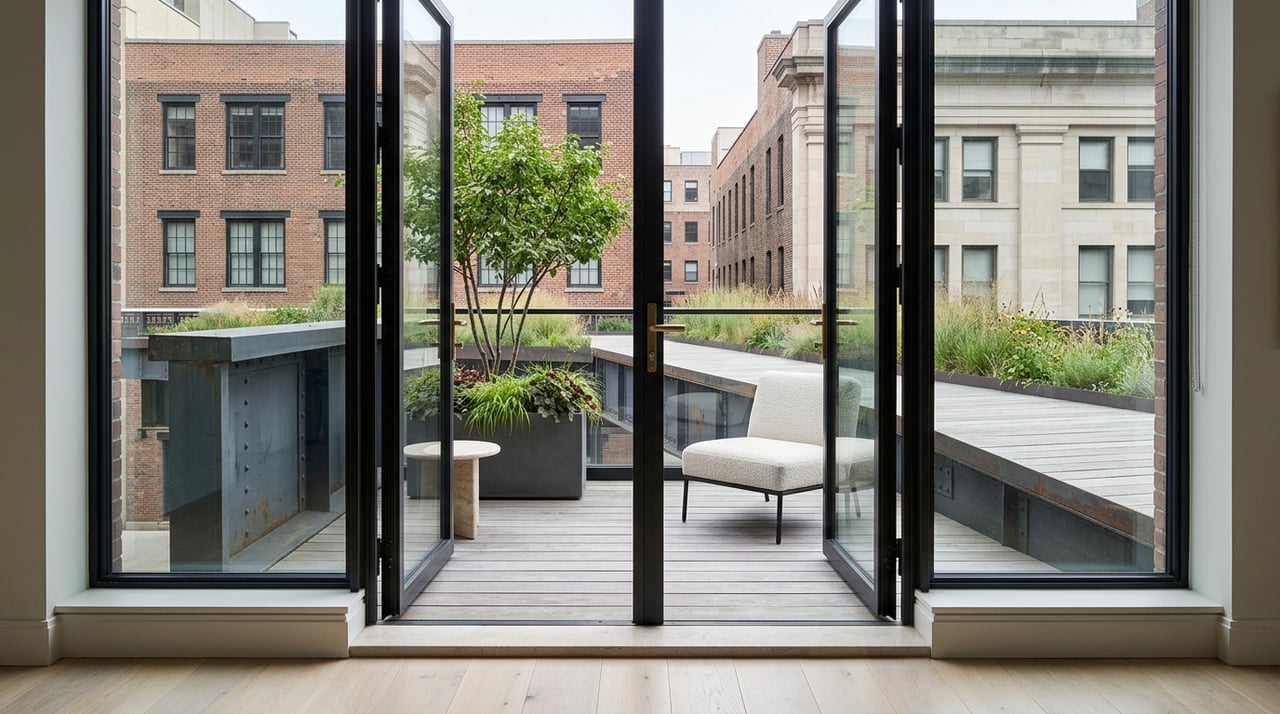
One of the clearest ways the High Line affects condo living is through light and views. The city’s environmental review states that setback rules along the corridor were designed to preserve light, air, and views for both the High Line and surrounding midblocks, while also opening public views toward the Hudson River and Midtown skyline, according to the West Chelsea urban design review.
That planning logic has carried into the residential product. Buildings along the corridor often emphasize large windows, open exposures, and a stronger relationship to the skyline or river. One High Line specifically highlights unobstructed city and water views and natural light, while 520 West 28th Street was designed in direct dialogue with the High Line and its layered urban setting.
The High Line also brings a very particular rhythm to daily life. The rezoning around the corridor anticipated residential buildings with local retail and community uses at street level, and the city reports that the park has attracted new visitors and economic development, with about 7 million annual visitors.
For you as a resident, that often translates to a more activated street scene. Depending on the block, you may be near restaurants, galleries, markets, and hospitality uses that make the area feel lively and connected. At the same time, the busiest entrances and commercial nodes can bring more pedestrian volume, so the experience varies meaningfully from one stretch of the High Line to the next.
Chelsea has long had architectural character, but the High Line helped push new condo development toward a more design-conscious identity. The Special West Chelsea District was created to support a mixed-use neighborhood, encourage residential and arts-related uses, and protect the High Line through special rules for height, setbacks, and development rights.
As a result, many condo buildings here are not generic towers. They often reflect Chelsea’s industrial history, gallery presence, and the park’s unusual geometry. For buyers who value architecture and a stronger sense of place, that can be a major part of the appeal.
At the southern end, from Gansevoort Street to roughly West 16th Street, the High Line sits close to some of its best-known anchors. The official map identifies features such as Gansevoort Woodland, the Diller-von Furstenberg Sundeck and Water Feature, and Chelsea Market Passage, with the Whitney at the southern tip.
This stretch tends to feel the most visitor-driven and hospitality-oriented. The combination of museum traffic, market activity, dining, and tourism creates a lively atmosphere that many buyers enjoy, especially if they want immediate access to some of downtown’s most recognizable destinations. Building stock here also leans more toward low-rise mixed-use structures and historic industrial fabric than the tallest condo towers.
Roughly from West 16th Street to West 23rd or 24th Street, the High Line takes on a different character. The map highlights spaces such as Chelsea Grasslands, 10th Avenue Square, Chelsea Thicket, and the 23rd Street Lawn and Seating Steps, while design coverage cited in the research describes the park here as a series of distinct micro-landscapes with varied tempos.
For condo living, this section often feels like the most balanced part of the corridor. You have the High Line’s planted edge and open space, plus Chelsea’s gallery blocks, loft conversions, boutique condominiums, and arts-related ground-floor uses nearby. It is a stretch where residential life, architecture, and neighborhood culture tend to feel especially integrated.
This is also where some of the corridor’s most notable residential projects appear. 520 West 28th Street ties its design directly to the High Line and Chelsea’s industrial past, while 100 Eleventh Avenue is framed around light, reflections, and Hudson River and Midtown views in the research provided. Together, they reflect how this section became one of Chelsea’s most design-led residential environments.
From about West 24th or 26th Street up to West 34th Street, the atmosphere shifts again. The High Line map shows features such as the 26th Street Viewing Spur, the 30th Street Cut-Out, and the Rail Yards section, while NYCEDC notes the park’s continuation into the broader Hudson Yards area.
Here, the visual character becomes broader and more skyline-oriented. The city’s environmental review notes that northern development would help redefine the west boundary of Midtown, and the area increasingly reads as a zone of larger-scale, newer mixed-use buildings. For buyers drawn to newer product, dramatic outlooks, and a more contemporary skyline feel, this part of the corridor can be especially compelling.
One High Line is the clearest example. Its marketing centers on city and water views and its position directly above the park, reinforcing how the north end has become associated with large-scale new development and a more expansive urban presence.
One of the most important things to understand about living near the High Line is that it is a tradeoff between energy and refuge. You gain access to open space, design interest, public art, and a highly walkable environment. You may also gain stronger daylight and wider views, especially in buildings shaped by setback-sensitive planning.
At the same time, not every block feels quiet. Entrances, destination retail, and major visitor nodes can create more foot traffic than you would find on a more tucked-away Chelsea side street. For many buyers, that balance is part of the appeal rather than a drawback, but it is worth evaluating carefully block by block.
If you are comparing condos near the High Line, one of the smartest places to start is with the relationship between the unit and the park. Based on the city’s planning framework and the way marquee buildings are marketed, units with more direct exposure, better setbacks, and higher floor lines often make the most of the corridor’s defining strengths.
That does not automatically mean the highest floor is always best. It means you should pay close attention to how a particular residence captures light, preserves privacy, and frames views. In this micro-market, subtle differences in positioning can shape the living experience in a big way.
Different segments of the High Line support different preferences.
That range is one reason Chelsea remains so layered. The High Line creates a unifying thread, but each section offers a distinct version of condo living.
Beyond lifestyle, the High Line has also shaped the area’s long-term market profile. Historical analysis cited by the World Bank and HR&A found that apartments near High Line sections 1 and 2 sold at substantial premiums over East Chelsea, while the park was linked to tax revenue growth and a faster pace of nearby development.
That does not mean every condo near the park performs the same way. Still, it does help explain why this corridor continues to attract attention from buyers focused on both lifestyle and long-term positioning. In a neighborhood like Chelsea, public space, design controls, and market demand are closely connected.
If you are evaluating condo opportunities along the High Line, nuance matters. The right fit often comes down to the exact block, the building’s relationship to the park, and how well the residence balances exposure, privacy, and day-to-day livability. For discreet, informed guidance on Chelsea and Manhattan luxury property, connect with Marina Bernshtein.
Marina developed the tenacity to face challenges and adversity in fast-paced environments early on and has continued to excel. Marina is happiest when she finds the perfect home for her buyers or renters and achieves the optimal value for her sellers. Contact her today!