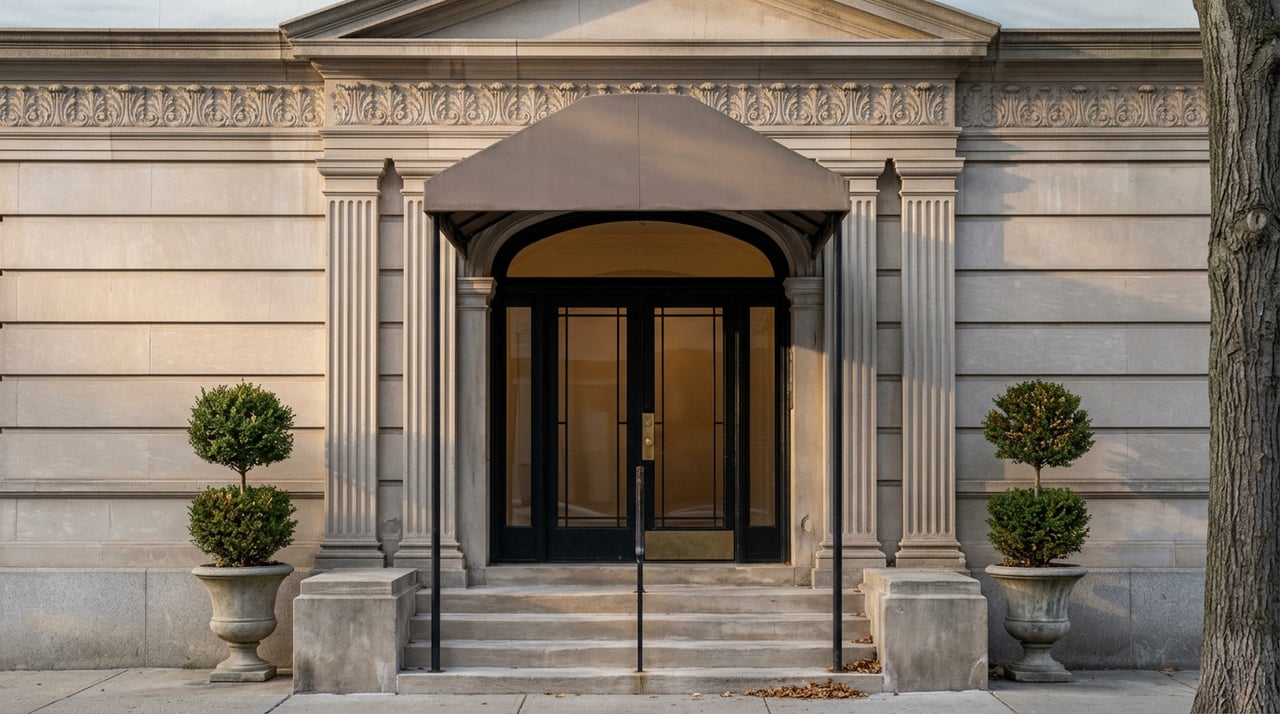
The Co-op Board Now Has a Deadline. The Upper East Side Still Sets the Terms.
Say you listed a co-op on Park Avenue this month. Your attorney tells you the buyer's board package went in the first week of August, and you start counting toward a 45-day decision, because that is the number every broker in the city has been repeating since late July. Then your managing agent mentions, almost in passing, that the building adopted a summer recess policy back in June. If the policy was disclosed to applicants in advance, the clock you were counting on may not be running; it may not start until September.
That gap between what the new law promises and what it actually delivers this month is the story. New York City's Cooperative Application Timeline Law took effect July 28, 2026, and it is a genuine change to how co-op boards operate. It is also, if you are transacting on the Upper East Side right now, less of a speed boost than the headlines suggest, and it does nothing at all to the financial bar a board sets before it will say yes.
The law, known formally as Local Law 2026/058 and referred to during its City Council passage as Intro 1120-B, applies to cooperative buildings with ten or more residential units, which covers the overwhelming majority of Upper East Side co-op stock along Fifth and Park Avenues. It does not touch condominiums, HDFC cooperatives, or buildings under a government housing program like Mitchell-Lama.
For a covered building, the mechanics are specific. Within 15 days of receiving a purchase application, the co-op must send written acknowledgment, by both email and registered mail, stating whether the package is complete or listing exactly what is missing. If that acknowledgment never goes out, the application is deemed complete automatically and the clock starts anyway. From there, the board has 45 days to approve, conditionally approve, or deny. It can take one 14-day extension without the applicant's consent, and another 14 days if it requests more documents. Anything beyond that requires the buyer to agree in writing.
Enforcement runs through the city's Department of Housing Preservation and Development, with violations adjudicated at the Office of Administrative Trials and Hearings. A first violation carries a $1,000 fine, a second $1,500, and each one after that $2,000. Those numbers matter for boards and managing agents. They are not large enough to change buyer behavior on their own, and they are not paid to the buyer who was kept waiting.
Here is the part that matters for anyone submitting a board package this August. The law lets a building toll both deadlines during July and August, but only if the board adopted a written recess policy before July 28 and disclosed it to applicants in advance. A board cannot invoke recess informally after the fact. It has to already be in the building's records.
That carve-out exists because co-op boards are volunteer bodies, and August has always been the month when the fewest of them are in one room at the same time. The practical result is that a law built to add predictability has a built-in pause switch that lines up precisely with the season when sellers most want speed, because Manhattan co-op closings that drift into fall carry mortgage rate locks, moving logistics, and sometimes a second transaction on the other end. If you are listing or bidding on a Fifth or Park Avenue co-op this month, the first question your attorney should be asking the managing agent is not what the deadline is. It is whether the building has a recess policy on file.
| Before July 28, 2026 | After July 28, 2026 | |
|---|---|---|
| Acknowledgment of a package | No required timeframe | 15 days, by email and registered mail |
| Decision on a complete package | No required timeframe | 45 days, plus available extensions |
| Reason required for denial | No | No |
| Missed deadline consequence | None | City penalty only, not automatic approval |
| Financial standards (DTI, liquidity, down payment) | Set entirely by the board | Unchanged |
| Applies to condos | N/A | Exempt |
A faster decision is not the same as an easier one. The board still does not have to explain a rejection, and a missed 45-day window does not mean your application is approved by default. It means the city can fine the building. The underlying financial screen, which is where most Upper East Side applications actually stall, has not moved and if anything has tightened this year.
Boards in 2026 are commonly asking for 12 to 24 months of post-closing liquidity, meaning cash and marketable securities left over after your down payment and closing costs are paid, not your net worth on paper. Retirement accounts are frequently discounted or excluded entirely because they are not accessible without penalty. The often-cited example still holds on the Fifth Avenue corridor: a building with $15,000 in monthly maintenance is looking for something in the range of $360,000 or more sitting in reserve after you close, separate from anything you owe on a mortgage. Debt-to-income ratios that comfortably cleared boards in 2021 and 2022, often in the 30 to 35 percent range, are landing closer to 25 to 28 percent this year at the more conservative buildings. Down payment minimums of 20 to 25 percent remain standard, and prime buildings on Park and Fifth can still require 50 percent down or all cash.
None of that changed on July 28. The law regulates the calendar a board operates on. It does not regulate the standard the board applies once it starts the clock.
There is a second-order effect worth sitting with if you are choosing between product types on the Upper East Side rather than between two buildings. Co-ops still typically transact at a discount to condos in Manhattan, commonly cited in the range of 20 to 30 percent, largely because the pool of buyers who can clear board scrutiny is smaller than the pool who can simply close on a deed. That discount has always been the trade: less money for more discretion handed to strangers who do not have to explain themselves.
The new law makes that trade more explicit than it used to be, because it only applies to one side of the ledger. A condominium closing on the Upper East Side, including a new development resale, was never subject to board approval in the way a co-op is, and it remains entirely outside this law's reach. If certainty of timeline matters to you more than the discount, because you are relocating cross-border, coordinating a sale in another market, or simply do not want your closing date at the mercy of a volunteer board's August schedule, the calculus between a co-op on Park Avenue and a condo elsewhere in the neighborhood just got a little more lopsided in the condo's favor. That does not make one choice right and the other wrong. It makes it worth pricing in deliberately rather than discovering it mid-contract.
A few things are worth confirming before you submit or accept a board package right now, with your attorney handling the specifics of any individual building's rules.
Does this law make co-op boards approve more buyers? No. It sets a process for when a board must respond, not a standard for how it decides. A board can still deny without giving a reason.
Does missing the 45-day deadline mean my application is automatically approved? No. It exposes the building to a city penalty. Your application status does not change on its own.
Does this apply if I'm buying a condo instead? No. Condominiums are exempt entirely, along with HDFC cooperatives, Mitchell-Lama buildings, and co-ops under ten units.
Can a board still take a summer break? Yes, if it adopted a written recess policy before July 28, 2026 and disclosed it in advance. If it did not, the standard clock applies even in August.
The law is worth understanding before you submit a package this fall, not because it will move faster than you expect, but because it is easy to assume it will and plan a closing date around that assumption. On the Upper East Side, where the board still holds most of the leverage, the better use of the next 45 days is making sure your package never gives it a reason to use it.
If you are weighing a co-op purchase, sale, or the condo alternative on the Upper East Side this season, Marina Bernshtein can walk through what a specific building's board culture and financial requirements actually look like. Schedule a confidential consultation to talk through the timing before you submit.
This article is general information, not legal, tax or financial advice. Consult a qualified professional about your situation.




Marina developed the tenacity to face challenges and adversity in fast-paced environments early on and has continued to excel. Marina is happiest when she finds the perfect home for her buyers or renters and achieves the optimal value for her sellers. Contact her today!