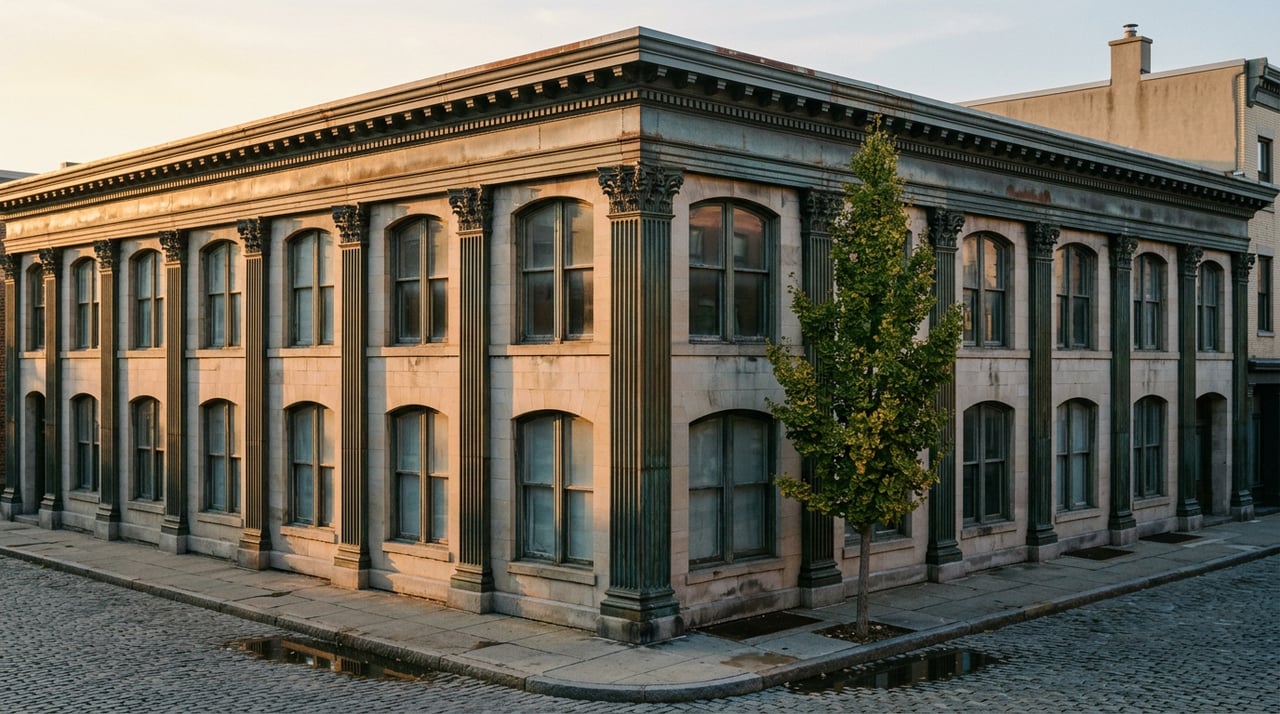
SoHo In September: The Storefronts Changing Hands While the Feast Takes Over the Block
Fifty-nine Grand Street has been dark for six years. The awning still says Lucky Strike, the name Keith McNally hung there in 1989 and kept running for thirty-one, but the windows have stayed black since the bistro closed at the start of the pandemic in April 2020. Anyone who has lived in SoHo through that stretch has walked past it enough times to stop noticing it, the way a missing tooth eventually just becomes part of a smile. That is about to change, and it is changing at the same moment as a dozen smaller things on the same ten square blocks, all of it landing inside the same three-week window.
None of it is coincidental. September in SoHo runs on one calendar for restaurants and beauty shops opening new doors, and a second, older calendar for the neighborhood's biggest annual crowd event next door in Little Italy. This year both calendars point at the same ten days, and knowing which is which is the difference between wandering into it and using it.
Start with what has a real date attached to it. A handful of smaller SoHo openings have confirmed dates in the next two weeks, and they are worth knowing before you plan a Thursday night:
That is a normal September for a neighborhood that turns over storefronts constantly. A bakery, two food openings a few days apart, a beauty shop refreshing its floor. What makes this particular stretch different is what is happening around it.
The Feast of San Gennaro runs September 17 through 27 this year in Little Italy, a few blocks east of SoHo's cast-iron core. It is not a SoHo event technically, but SoHo residents know better than anyone that the border between the two neighborhoods gets porous the moment the Feast opens. The festival's footprint runs along Mulberry Street with its Blessing of the Stands, its Grand Procession, and a Solemn High Mass honoring the patron saint of Naples, and the crowd it draws does not stay neatly inside Little Italy's lines. Broadway and the blocks around Prince and Spring fill up with overflow foot traffic for the full eleven days.
That is the part longtime residents plan around and newcomers usually don't. A restaurant opening on September 21, like Kythira, or a beauty shop picking September 19 and 20 for its relaunch weekend, is opening directly into that traffic. Whether that is smart timing or just how the calendar fell this year, the effect is the same: this is the loudest, most crowded stretch SoHo will see all month, and four separate businesses are choosing to open or reopen squarely inside it.
The small openings are real, dated, and easy to verify. The bigger transformation on these same blocks is slower, and it has been building for longer than most of the September calendar suggests.
Two of SoHo's most recognizable restaurant addresses are changing hands entirely, and neither has reopened yet.
At 59 Grand Street, British chef Thomas Straker signed the lease on the old Lucky Strike space, taking on a storefront that had sat empty since McNally closed it during the pandemic's first weeks. Straker built his reputation in Notting Hill and on social media, where his butter-forward cooking and charcoal-grilled flatbreads earned him a following in the millions before he ever opened a second location. His New York restaurant will be his first outside the United Kingdom, and by his own account when the lease was announced, he understood what he was taking on. Lucky Strike wasn't just a restaurant that closed. It was the kind of place regulars built routines around for three decades, and Straker has talked about wanting to do right by that history rather than erase it. As of the most recent reporting on the space, the doors were still shut and no firm opening date had surfaced.
A few blocks away at 199 Prince Street, something quieter but just as significant is happening. Little Prince, the cozy French bistro that anchored that corner for years, is giving way to Romy, a fifty-seat steakhouse from restaurateur Cobi Levy. This isn't an outside operator moving in on a beloved neighborhood spot. Levy is the same person behind Little Prince and behind Lola Taverna, both fixtures that helped define SoHo's downtown dining identity, and Romy is his own reinvention of his own address. The new restaurant is planned as a raw bar and steak concept with late-night service running from five in the evening to one in the morning, dinner and late-night only, no lunch. Levy has also opened a restaurant in Los Angeles in the past year, so the SoHo pivot is happening alongside expansion elsewhere rather than a retreat from the neighborhood. Like Straker's project, Romy has not opened as of this writing, though the concept, the seat count, and the hours are already locked into public filings.
Here's the shape of it laid out plainly:
| Address | What it was | What's coming | Status |
|---|---|---|---|
| 59 Grand Street | Lucky Strike, 1989–2020 | Straker's, chef Thomas Straker's first U.S. restaurant | Not yet open |
| 199 Prince Street | Little Prince | Romy, 50-seat steakhouse from Cobi Levy | Not yet open |
What makes this September worth paying attention to isn't any single opening. It's that SoHo is running two different clocks at once. One clock moves in weeks: a bakery opens, a beauty shop reopens for a weekend, a new restaurant seats its first table three days after the last one did, and all of it happens to land during the ten loudest days of the year because the Feast of San Gennaro doesn't wait for anyone's soft opening. The other clock moves in years. Lucky Strike went dark in 2020 and its replacement still hasn't served a meal. Little Prince's own owner is remaking his own restaurant into something else entirely, and that transition has been public for months without a ribbon cutting yet.
Both clocks are real, and both matter if you live here. The fast one tells you where to eat this weekend. The slow one tells you that the character of two of SoHo's most-loved addresses is being rewritten by people who understand exactly what they inherited, not by developers erasing history for the sake of turnover. Straker inheriting McNally's old room and Levy replacing his own restaurant with a new concept on the same footprint are two very different versions of the same idea: that even a neighborhood as established as SoHo keeps reworking its own institutions rather than just losing them.
For residents, that's the piece worth holding onto through the noise of September. The Feast will end on the 27th, the new bakery and restaurants will settle into their routines, and the crowds on Mulberry Street will thin out. But 59 Grand and 199 Prince are still going to be sitting there, mid-transformation, waiting for the kind of opening that doesn't run on a festival calendar. Knowing that now, before the scaffolding comes down, is the difference between reading about it later and having watched it happen.
If you're a SoHo resident weighing what these kinds of shifts mean for your own building or block, or you're curious how a neighborhood's changing storefronts tend to track with what happens to its real estate values over time, Marina Bernshtein has spent her career reading exactly these signals across Manhattan's most established addresses. A conversation costs nothing and stays confidential.
Marina developed the tenacity to face challenges and adversity in fast-paced environments early on and has continued to excel. Marina is happiest when she finds the perfect home for her buyers or renters and achieves the optimal value for her sellers. Contact her today!